
An Incredibly Easy Method That Works For All
10 Apr 2021
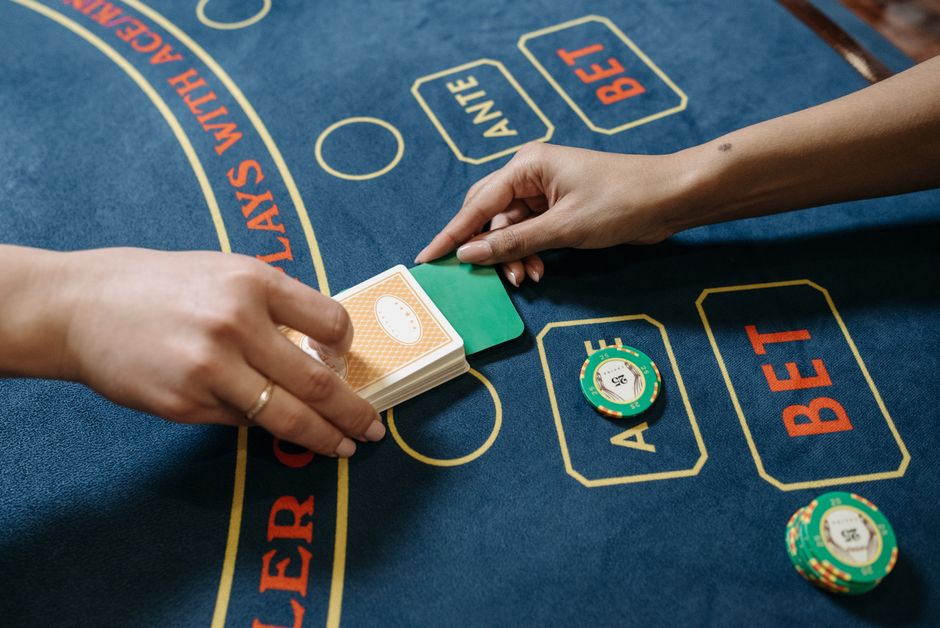
Most casino regulars can tell you the payout percentage on their favorite slot machine. Far fewer could explain why that number matters — or how a 2% difference in house edge quietly drains their bankroll over a long weekend. That gap between knowing a stat and understanding it is where smart players separate themselves from the crowd. Whether you're spinning reels, grinding cash-game poker, or hunting value on a football fixture, the same principle governs everything: the math doesn't care how you feel about it.
Every game in a casino, physical or online, is built around a mathematical advantage for the operator. That's not a conspiracy; it's the business model. What matters is the size of that advantage and how many times per hour you expose your money to it.
Compare two popular options. European roulette carries a house edge of 2.7% thanks to its single zero. American roulette, with the extra double zero, jumps to 5.26% — nearly double the cost for what looks like the same game. Over 200 spins with a $10 average bet, that's roughly $54 in expected losses on the European wheel versus $105 on the American one. Same thrill, double the price. Anyone weighing up options should see สล็อตเว็บตรง.
Then there's blackjack, where basic strategy can drag the house edge below 1% on a favorable table. Baccarat's banker bet sits around 1.06%. Meanwhile, many penny slots hover between 4% and 10%, and lottery-style games can exceed 15%. None of this means slots are bad — it means you should know what you're paying for entertainment.
Slot players get a bad rap in serious gambling circles, often unfairly. Modern online slots publish their RTP (return to player) openly, and that transparency is a gift. A 96.5% RTP game returns 96.5 cents per dollar wagered over millions of spins. A 94% game returns two and a half cents less per dollar — which sounds trivial until you've cycled $5,000 through it.
Two traps catch most players here. First, RTP is measured over the long run, not a session. You can play a 97% game and lose everything in twenty minutes; that's variance, not a rigged machine. Second, high-volatility slots pay less often but in bigger chunks — great if you enjoy the swing, brutal if your bankroll is thin.
Poker sits in a different universe from table games and slots. The rake — typically 5% capped at a few dollars per pot — is the only tax you pay. Everything else is a battle of skill against other players, and that changes the entire approach.
At low-stakes online tables, the money is won by exploiting opponents who play too many hands, chase draws without odds, and bluff in obvious spots. Tight-aggressive poker isn't sexy advice, but it prints money against recreational fields. Position matters enormously: acting last gives you information before you commit chips, and over hundreds of hands, that informational edge compounds.
Bankroll management is where most promising poker players flame out. A common guideline for cash games is 20 to 30 buy-ins for your stake, and 50 to 100 buy-ins for tournaments due to higher variance. Skipping this rule is how a winning player goes broke in a month.
Here's something casual bettors rarely internalize — the difference between a profitable bettor and a losing one is often not prediction skill but price. If Team A is +150 at one sportsbook and +165 at another, taking the better number is free money over the long run. A 2%–3% edge in odds is often the entire margin between profit and loss across a season.
Understanding the vig (juice) is equally crucial. Standard -110 pricing on both sides of a market means you need to win 52.4% of your bets just to break even. At -105, that drops to about 51.2%. These small shifts are why professional bettors maintain accounts at multiple books and treat line shopping as non-negotiable.
Online casinos throw welcome packages, reload bonuses, and free spin bundles at players constantly. Some are genuinely valuable. Others are marketing dressed up as generosity. The dividing line is almost always the wagering requirement — how many times you must bet the bonus before withdrawing anything.
A £100 bonus with 35x wagering on slots means £3,500 in total bets before a withdrawal is possible. On a low-RTP game, the expected cost of clearing that bonus can exceed the bonus itself. Conversely, a 10x requirement on a 97% RTP game is often worth pursuing. The math isn't complicated, but it requires five minutes of reading — a small price for not torching your own bankroll.
Also watch for game weighting. Many casinos count slot bets at 100% toward wagering but table games at 10% or exclude them entirely. That detail decides whether a bonus is a gift or a leash.
iGaming rewards players who treat it like a market rather than a magic show. You don't need to be a mathematician or a professional gambler to benefit — you just need to pick games with a reasonable house edge, shop for the best odds, respect variance, and manage your bankroll like it belongs to someone you respect. The thrill of a big win is real and worth chasing. So is keeping enough in your account to keep playing tomorrow.

Audata No rushing, no fuss — just thoughtful notes and practical help, written by people who care.

April 25, 2019 at 10:46 am
Take in the iconic skyline and visit the neighbourhood hangouts that you've only ever seen on TV. Take in the iconic skyline and visit the neighbourhood.


Want to be notified when we launch a new template or an udpate. Just sign up and we'll send you a notification by email.


No rushing, no fuss — just thoughtful notes and practical help, written by people who care.

Soldman Kell
April 25, 2019 at 10:46 am
Take in the iconic skyline and visit the neighbourhood hangouts that you've only ever seen on TV. Take in the iconic skyline and visit the neighbourhood.